
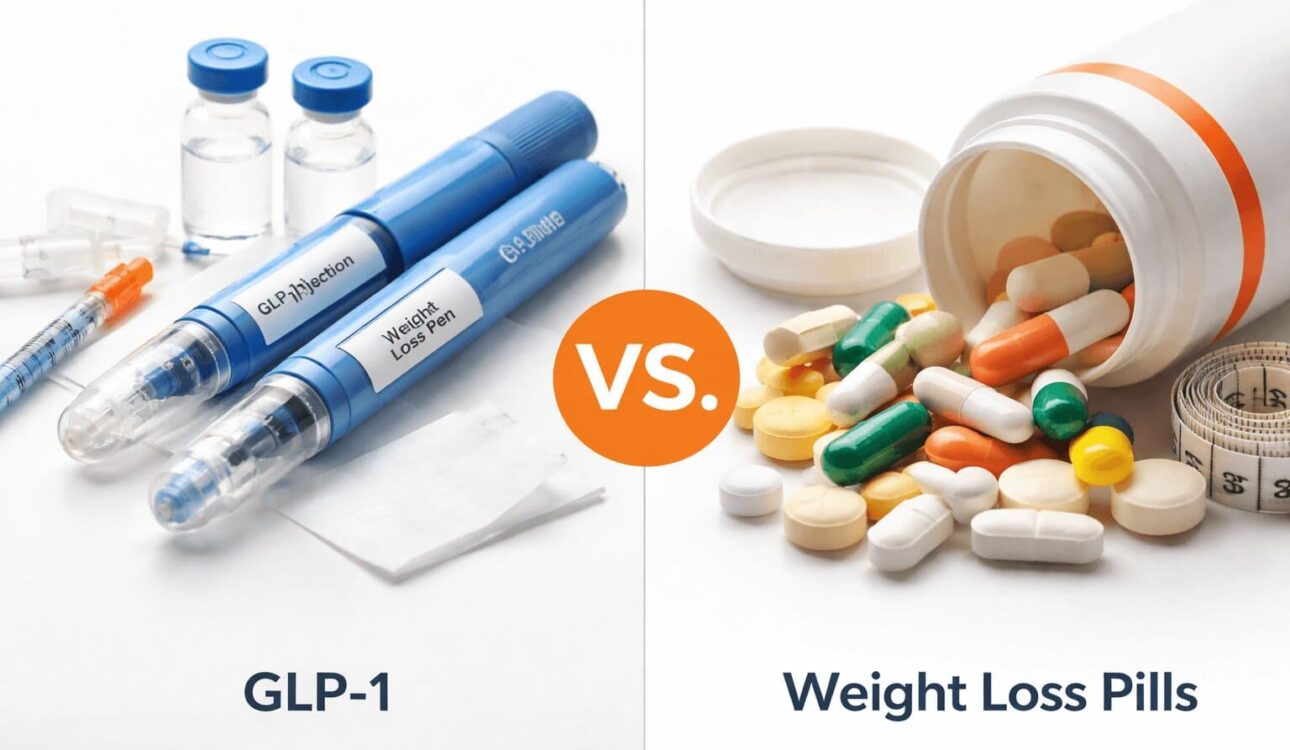
GLP-1 vs Weight Loss Pills: Which Works Better?
If you’re comparing prescription weight loss options, you’ve probably narrowed it down to two categories: GLP-1 medications and traditional weight loss pills. Both are used in medical weight loss programs. Both can support fat loss when paired with nutrition and lifestyle changes. But they work differently, feel different, and may fit different health profiles.
In this guide, you’ll learn how GLP-1 medications compare to weight loss pills in effectiveness, timeline, safety, convenience, and long-term sustainability. This will help you have a more informed choice of which mode you take.
What are GLP-1 Medications?
GLP-1 stands for glucagon-like peptide-1. It’s a hormone your body naturally releases after eating. It helps regulate appetite, insulin, and blood sugar levels.
GLP-1 medications are designed to mimic this hormone. They work by:
Increasing feelings of fullness
Reducing appetite and cravings
Slowing stomach emptying
Supporting blood sugar regulation
Many GLP-1 medications used for weight management are injectable and follow a gradual dose escalation schedule. This helps improve tolerability and reduce side effects. The FDA-approved prescribing information outlines how dosing is typically adjusted over time (U.S. Food and Drug Administration, 2023).
Because they act on gut-hormone pathways, GLP-1 medications are often used in modern obesity medicine when lifestyle changes alone have not produced sufficient results.
What Are Weight Loss Pills?
Prescription weight loss pills are oral medications taken daily. Unlike GLP-1 medications, most oral options do not mimic gut hormones. Instead, they work through other mechanisms such as:
Suppressing appetite through brain pathways
Reducing fat absorption in the digestive system
Influencing hunger signals through combination effects
There are multiple FDA-approved medications in this category. An overview of how prescription weight loss drugs function and who may qualify for them is summarized by the National Institute of Diabetes and Digestive and Kidney Diseases (NIDDK, 2025).
The key difference is mechanism. GLP-1 medications regulate appetite hormonally. Many oral medications regulate appetite neurologically or mechanically.
GLP-1 Vs Weight Loss Pills: Effectiveness and Expected Results
Across many studies, GLP-1 medications used for chronic weight management often produce larger average weight loss compared with many older oral medications. This is one reason GLP-1 therapy has become a major part of modern obesity medicine.
That said, oral medications can still be effective for the right candidate, especially when paired with structured follow-up and lifestyle support.
A clinician-friendly overview of how prescription weight loss drugs typically work and what outcomes may look like is summarized here (Mayo Clinic, 2024).
Side-By-Side Comparison of Expected Results
| Comparison Factor | GLP-1 Medications | Weight Loss Pills |
|---|---|---|
| Average Weight Loss (Clinical Studies) | Often higher average percentage loss in chronic weight management trials | Typically moderate average percentage loss depending on medication |
| Mechanism Of Action | Mimics gut hormone to regulate appetite and blood sugar | Suppresses appetite or alters fat absorption |
| Blood Sugar Impact | Often improves insulin response | Varies by medication |
| Appetite Control | Hormonal regulation of hunger signals | Neurological appetite suppression |
| Sustainability Potential | Designed for long-term metabolic regulation | May require stronger behavioral reinforcement for maintenance |
For patients dealing with both weight and hormonal challenges, hormone replacement therapy may complement a structured weight loss plan.
Speed Vs Sustainability: What The Timeline Can Look Like
GLP-1 Medications
Many people notice appetite changes early, but visible weight changes may be more gradual. Dose escalation can take several weeks, and meaningful progress often appears after reaching a therapeutic dose that is well tolerated.
| Phase | What Typically Happens |
|---|---|
| Early Phase | Appetite signals change first |
| Middle Phase | Steady weight reduction as routines stabilize |
| Later Phase | Plateaus may occur and require dose or strategy adjustments |
Weight Loss Pills
Some oral medications act quickly, especially those that suppress appetite. People may notice early changes in hunger levels. However, some individuals experience diminishing benefit over time if routine, nutrition, and follow-up structure are not consistent.
| Phase | What Typically Happens |
|---|---|
| Early Phase | Noticeable appetite suppression |
| Middle Phase | Variable weight change depending on adherence |
| Later Phase | Risk of plateau without behavioral reinforcement |
Side Effects and Safety
All prescription medications carry potential risks. The appropriate option depends on your medical history and risk profile.
GLP-1 Side Effects
Common side effects may include nausea or gastrointestinal discomfort, particularly during dose escalation. These often improve with gradual titration and meal adjustments.
Safety guidance and contraindications are outlined in FDA labeling (U.S. Food and Drug Administration, 2023).
Weight Loss Pill Side Effects
Side effects vary depending on the medication type.
| Risk Category | GLP-1 Medications | Weight Loss Pills |
|---|---|---|
| Gastrointestinal Symptoms | Common during dose changes | Possible depending on drug |
| Heart Rate Impact | Typically neutral | Some stimulant-based options may increase heart rate |
| Sleep Disturbance | Not typically primary | Some medications may affect sleep |
| Digestive Changes | Slower gastric emptying | Some reduce fat absorption |
For broader context on how medication fits within chronic obesity care, see WHO-aligned guidance summarized through Celletti et al., 2025 paper.
Matching medication to your health history is critical.
Convenience: Injection Vs Pill
It is easy to assume a pill is always more convenient. But weekly injections can actually be simpler than remembering a daily medication for some people.
| Convenience Factor | GLP-1 Injections | Weight Loss Pills |
|---|---|---|
| Dosing Frequency | Often weekly | Typically daily |
| Travel Considerations | Requires proper storage and supplies | Easy to pack and carry |
| Habit Formation | Weekly routine | Daily routine |
| Missed Dose Risk | Less frequent dosing | Higher chance of missed daily doses |
Ask yourself:
Do you follow weekly routines better than daily ones?
Are you comfortable with injections?
Do you travel frequently?
Are you more likely to forget daily medication?
There is no right answer. The best choice is the one you can follow consistently.
Which Option Works Better?
GLP-1 medications often produce greater average weight loss in clinical trials. Weight loss pills may offer convenience and a lower barrier for some individuals.
The better option depends on:
Your metabolic profile
Your medical history
Your comfort with injections
Your ability to maintain routine
Long-term maintenance planning
Frequently Asked Questions
Eligibility depends on factors such as body mass index, weight-related health conditions, previous attempts at lifestyle changes, and overall medical history. A provider will review your medications, cardiovascular history, metabolic markers, and long-term goals before recommending either GLP-1 therapy or oral weight loss medication. A structured consultation helps determine what is medically appropriate for you.
During an initial visit, your provider reviews your health history, discusses weight patterns, evaluates current medications, and identifies metabolic risk factors. You may also review nutrition habits, sleep quality, and realistic expectations. From there, a personalized plan is created, which may include medication, follow-up scheduling, and adjustments based on progress.
Some individuals transition off medication, while others continue longer-term under medical supervision. The decision depends on metabolic health, weight maintenance history, and lifestyle consistency. A gradual transition strategy is often discussed to help reduce the risk of weight regain.
Weight regain can occur if underlying habits and metabolic factors are not addressed. This is why structured programs emphasize nutrition consistency, strength training, and ongoing follow-up. Medication can support appetite and metabolism, but long-term weight management typically requires sustainable behavior patterns.
You can find medical weight loss programs using Google Business Profile by searching for licensed clinics in your area. This allows you to compare services, hours, and general patient information before scheduling a consultation.
Final Verdict
Choosing between GLP-1 vs weight loss pills about selecting the approach that aligns with your medical history, lifestyle, and long-term goals. GLP-1 medications may offer stronger average results in many clinical settings, especially for individuals with metabolic challenges. Weight loss pills may provide a practical alternative for those who prefer oral medication or have specific clinical considerations.
The most effective strategy is personalized for you and your goal. Structured follow-ups, realistic expectations, and gradual adjustments often determine long-term success more than the medication itself. When your plan is tailored and supported, you are more likely to see steady, sustainable progress.
Medical Disclaimer
This article is for educational purposes only and does not constitute medical advice. Prescription weight loss medications, including GLP-1 therapies and oral weight loss pills, require evaluation by a licensed healthcare professional. Individual results vary based on health history, adherence, and clinical factors. Always consult a qualified provider before starting, stopping, or changing any medication or weight management program.